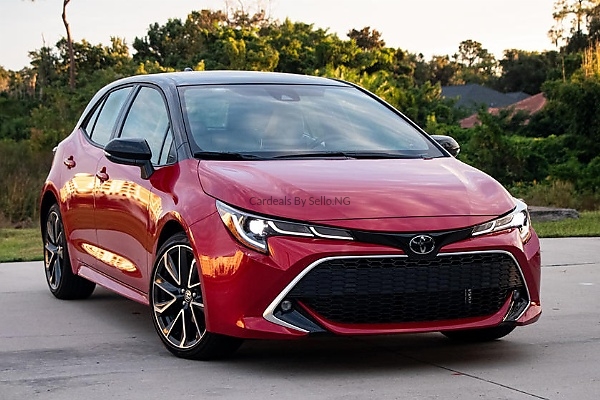
Toyota’s hybrids have already shown how fuel-efficient the combination of petrol and electric power can be in everyday driving. With the new generation Corolla, Toyota is announcing an even more efficient hybrid system that could reduce consumption to below three liters per 100 kilometers, writes Autocar.
The 13th generation Corolla is due to arrive by 2030, and according to the British magazine, the changes will include much more than just looks. Toyota is preparing a more efficient hybrid system, more cabin space and a platform that will allow customers to choose between several types of powertrain.
The new hybrid system will be based on a new 1.5-liter four-cylinder gasoline engine, available in both turbocharged and non-turbocharged versions. The new powertrain is said to deliver 15 percent lower fuel consumption.
Toyota has not yet released official estimates, but as an example, it cites the current Aygo X, which according to its data can consume around 3.3 l/100 kilometers in real conditions. On this basis, Autocar estimates that the new system could achieve consumption of around 2.8 liters per 100 kilometers.
That figure has yet to be confirmed, however. For now, it’s an assessment of the potential of the new technology, not the officially declared consumption of the future Corolla.
Toyota is not only working to reduce fuel consumption, but also to reduce the size of the powertrain. The new petrol engine will be 10 percent smaller than the 1.5-liter engine in the current Aygo X and Yaris models, although it will have one more cylinder. The system’s electrical components, including the inverter and the powertrain control unit, have also been reduced.
Such a solution should free up space and allow versions with a SUS engine to have an equally spacious cabin as their electric variants.
The more compact powertrain also gives designers more freedom to design a lower and more aerodynamic body. This should contribute to lower fuel consumption in petrol versions, and lower electricity consumption in electric variants.
The direction in which Toyota is developing the new model was announced by a futuristic concept presented at last year’s Tokyo Motor Show (pictured). The new Corolla should be significantly different from the current model in terms of appearance and technology.
The new generation is being developed on a platform that will support a classic hybrid, a plug-in hybrid, an internal combustion engine and, for the first time in a Corolla, a fully electric drivetrain.
The platform will be designed primarily for electric cars. Thiebault Paquet, head of Toyota’s European R&D department, explained why Toyota chose this approach.
“Battery electric cars are the most demanding to develop. To be efficient, they need to have the best possible aerodynamics. We also want to offer customers as much usable space as possible, so we decided to make that our starting point for the platform,” he said.
For Toyota, this also means simpler production. Electric and combustion engine versions will be able to be built on the same production line. This reduces factory adaptation costs and makes it easier to align production with customer demand.
If fuel economy announcements prove to be achievable, the new Corolla in a classic hybrid version could attract drivers who want to fill up less often and not have to think about where to fill up their car.

-
Read More: Toyota’s Low-Selling Crown Signia Gets A Price Bump For 2027

Discussion
0 CommentsShare your thoughts — every perspective adds value.