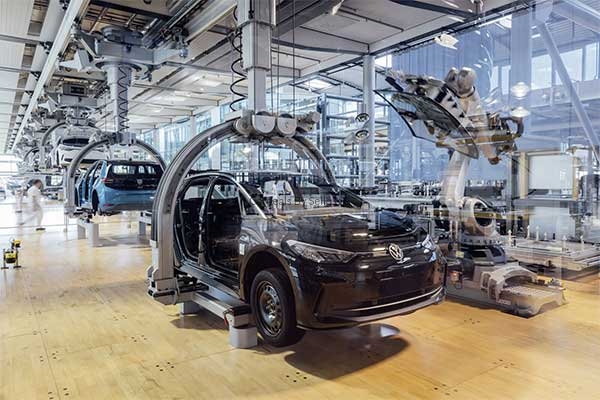
The global auto industry is facing a new, unexpected threat. With already familiar challenges like Chinese competition and the expensive electric transition, the auto industry is now threatened with a blow to supply chains.
The problem was warned about by Matteo Martini from the analysis firm Mobility Global, speaking at the opening of the conference (Transportation Technology Innovation Meetings) in Turin. According to his forecasts, the global production of passenger vehicles should reach 95 million units by 2029. The main engine of that growth will be electrification, so fully electric cars are expected to account for more than a third of the world’s total production by 2031.
Is the pandemic scenario repeating itself?
The realization of these forecasts directly depends on the availability of semiconductors. The automotive sector still well remembers the great shortage of chips between 2020 and 2022, when factories around the world were temporarily closed, and customers waited months for new cars.
History could now repeat itself, but this time the cause is not a pandemic but technological progress.
What is it about?
The semiconductor market is under tremendous pressure due to the huge demand from data centers dedicated to artificial intelligence. Major chipmakers are turning to more profitable components for the AI industry and are shifting their production capacity in that direction. The result is less availability of the chips needed by the auto industry, especially the DRAM memories that power modern infotainment and driver assistance systems (ADAS).
Prices jumped by 70 percent
According to data from Mobility Global, the consequences are already being felt on the market – the prices of certain automotive components at the beginning of 2026 have jumped by as much as 70 percent compared to the same period last year. Analysts warn that such supply tensions could continue throughout 2027 and 2028, writes Motor1.
Paradoxically, electric cars, which should lead the growth of the industry, could further complicate the situation. On average, battery-powered vehicles require up to two and a half times more semiconductors than classic models with petrol engines, mostly due to the complex power electronics that control the battery and electric motor.
Although there are no mass production stoppages in the factories for now, the increasing dependence of cars on software and electronics pushes the stability of supply to the fore. Rising costs and bottlenecks in the supply of chips could seriously slow down the announced takeoff of the automotive industry.

-
Read More: Due To A Lack Of Parts, Fiat 500 Production In Turin Was Suspended



Discussion
0 CommentsShare your thoughts — every perspective adds value.