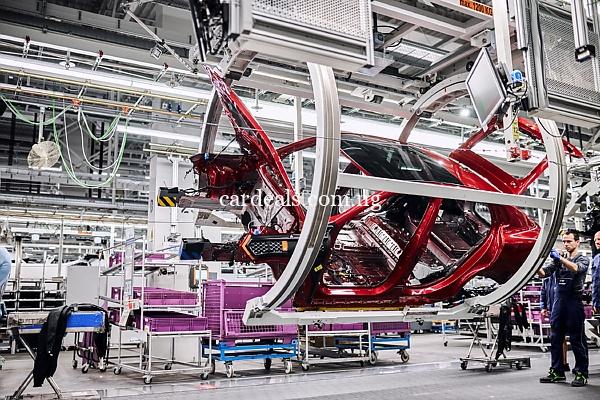
European car manufacturers not only suffer from direct competition from Chinese models but are also often largely dependent on China for parts. The EU is trying to tackle the former with targeted import tariffs, and there is also a plan for the latter. Among other things, the European Union wants European manufacturers to use battery technology largely produced in Europe for their EVs, in exchange for subsidies. In this way, the EU hopes to encourage manufacturers to increase their independence.
The so-called Industrial Accelerator Act (IAA), under which this plan falls, will enter into force next year at the earliest. From that moment on, manufacturers will have six months to source battery cells, among other things, from the EU in order to meet the subsidy requirements. The ACEA, the European association of car manufacturers, fears that this is not feasible. “The requirements for the localization of battery production are particularly strict, and we see no feasible way for the sector to meet them within the timeframe set by the European Commission. Europe needs more time to develop supply chains for raw materials and other upstream activities and to reduce costs, as well as to address the structural disadvantages that make production in Europe more expensive in the first place,” reports Automotive News.
Specifically, the ACEA wants the time to meet the start requirements to be three years instead of six months from the start of the IAA. Furthermore, the ACEA wants the planned further tightening of the requirements to be postponed. Currently, the EU still requires that three years after the start of the IAA, even more battery components come from the EU than at the beginning. The ACEA wants that deadline to be extended to five years.
-
Read Also: BYD Set To Build Factories In Europe


Discussion
0 CommentsShare your thoughts — every perspective adds value.